


List of Initiatives
Below is a list of our current technology development initiatives. Research output will be deployed through multiple channels, including commercialization through Sento.
Ninja Codes
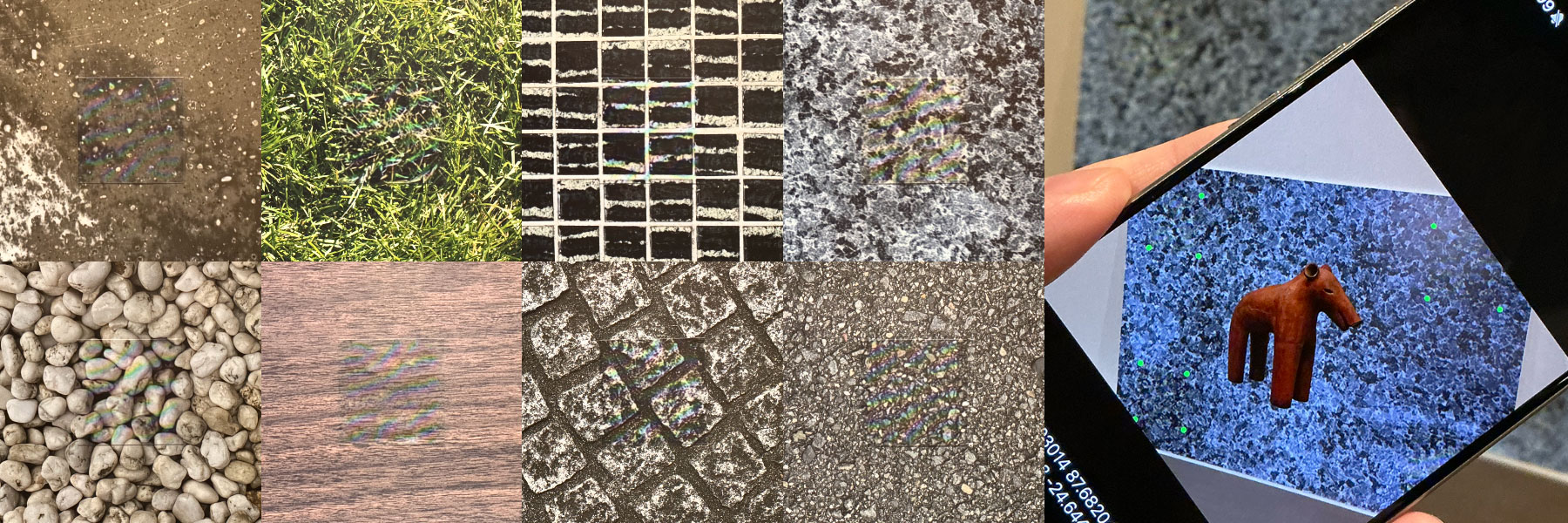
Ninja Codes are neurally generated fiducial markers that can be made to naturally blend into real-world environments. An encoder network converts arbitrary images into Ninja Codes by applying visually modest alterations; the resulting codes, printed and pasted onto surfaces, can provide stealthy location tracking in contexts where conventional fiducial markers (e.g., ARTags) are unsuitable for aesthetic and other reasons. Our goal is to deploy the codes at scale in urban environments, creating a new spatial infrastructure that supports various applications such as augmented reality and robotics. (See project page for more details.)
- Reference(s):
- [1] Takeuchi, Y., Imoto, Y., Kato, S. Ninja Codes: Neurally Generated Fiducial Markers for Stealthy 6-DoF Tracking. CVPR 2026 Findings.
- [2] Imoto, Y., Kato, S., Takeuchi, Y. Stealthy Location Tracking with Ninja Codes. SIGGRAPH Asia 2024 Em. Tech.
dédédé
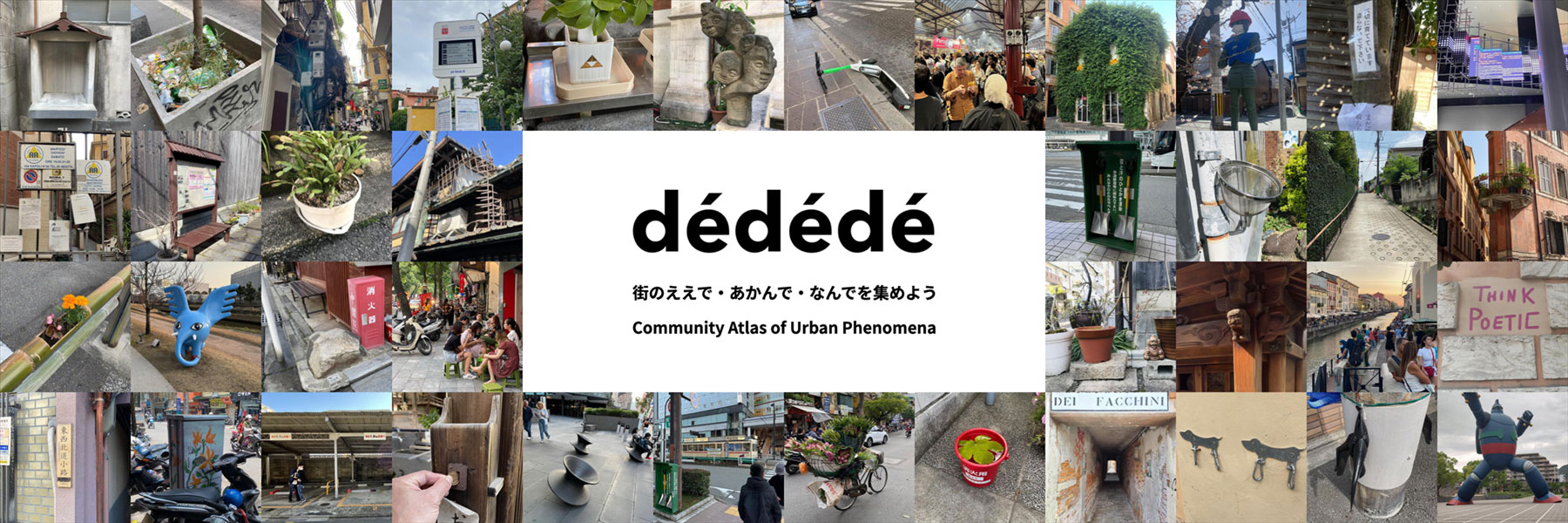
dédédé is an online platform that invites citizens to share the various positive, negative, and curious things they find in urban spaces. (The name dédédé comes from three Kansai dialect words: eedé, akandé, and nandé — meaning good, bad, and why.) Developed through broad collaboration with urban practitioners, the platform is intended to serve as an open forum that fosters public interest in urban design, gently steering users toward active participation in local urbanism. We believe that the uploaded data will be of value to city officials, designers, and academics as well. The platform is free to use, so please check it out!
- Reference(s):
- [1] Takeuchi, Y., Hoshimure, K., Narita, M., Katayama, Y., Tanaka, Y., Fukutomi, M., Tsuda, I., Kim, D., Abe, T. Machiaruki or Machizukuri? Staged Co-design in the Development of "dédédé". ACM COMPASS 2026.
Printable Garden
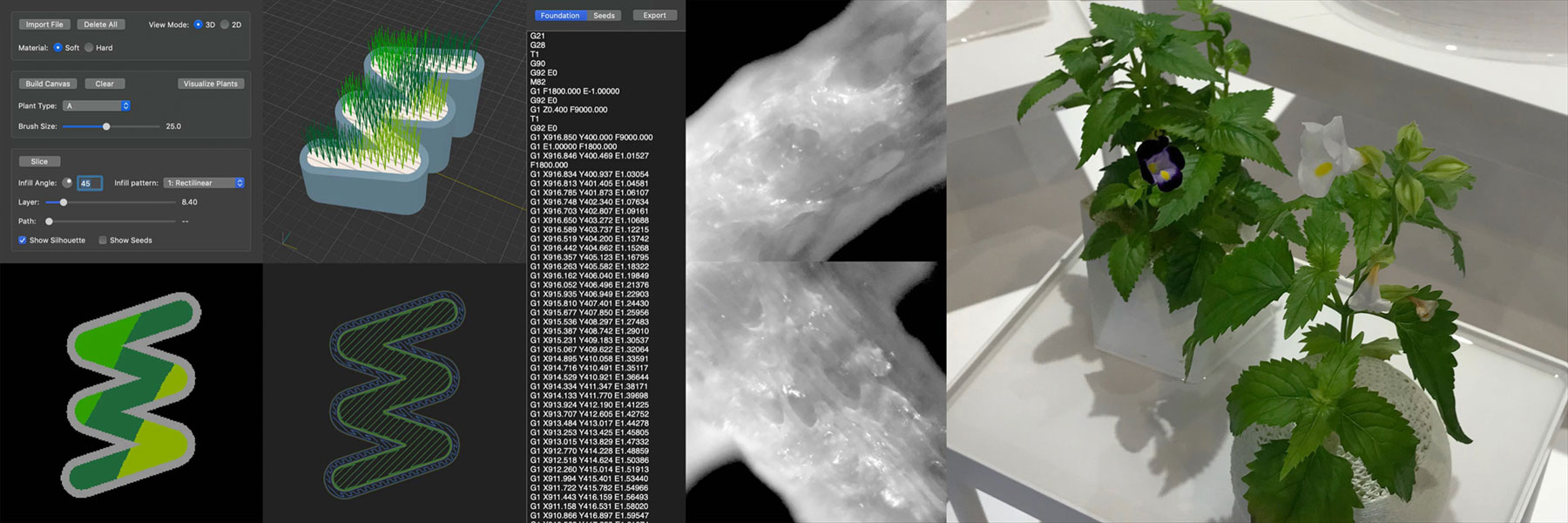
Community gardening, and other efforts to bring nature into the city, are some of the most common forms of citizen-led urbanism. To further accelerate such activities, we are developing a 3D printing technology that fabricates lush, small-scale "gardens" that also serve as habitats for targeted animals, insects, or birds (e.g., miniature sanctuaries for fireflies). Although the technology is in early research stage and is still impractical for real-world deployment, we believe that in the long term, the work will lead toward a future where citizens play a central role in shaping the ecosystems of their own neighborhoods.
- Reference(s):
- [1] Takeuchi, Y. 3D Printable Hydroponics: A Digital Fabrication Pipeline for Soilless Plant Cultivation. IEEE Access, 2019.
AnyLight
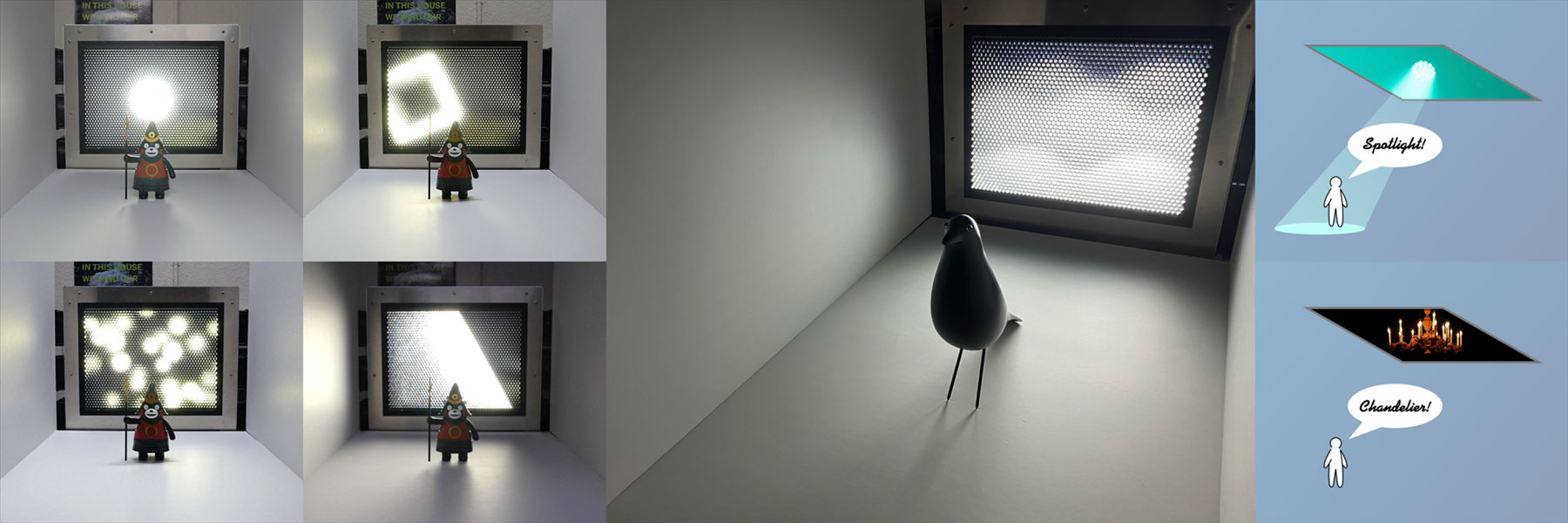
AnyLight is a panel-shaped, programmable lighting device that can dynamically replicate the illumination effects of a wide array of artificial and natural light sources, such as spotlight, chandelier, and sunlight. The device makes use of an optical principle ("integral illumination") similar to that used to build glasses-free 3D displays, enabling fine directional control of outgoing light rays. While originally conceived as a futuristic form of public lighting, the technology is versatile and can theoretically be used to replace conventional lighting in a variety of settings, including film and photography studios.
- Reference(s):
- [1] Takeuchi, Y. and Nagamine, K. Theory and Implementation of Integral Illumination. IEEE Access, 2022.